Genesis as a Parable — Simplified Scriptures Series


Jesus always spoke to the crowds using parables. In fact, the Bible says Jesus would never speak to the crowds without using parables.

A parable is a fictional story that is used to teach deep moral and spiritual truths.

The Scriptures say:

Matthew 13:34-35 (NIV): Jesus spoke all these things to the crowd in parables; he did not say anything to them without using a parable. So was fulfilled what was spoken through the prophet: “I will open my mouth in parables, I will utter things hidden since the creation of the world.”

With that being the case, wouldn’t it make sense that other Bible stories “from the creation of the world” might also be parables?

I present to you, as a simplified explanation, that the stories in Genesis chapters 1 through 10 could be parables.

In fact, it is possible that the stories in the entire book of Genesis (perhaps even Exodus) could be parables like the kind that our Lord Jesus taught.

This would harmonize perfectly with modern science and archaeology. There would be no need for elaborate, convoluted attempts to force Genesis and Exodus to fit in with modern evidence.

Myself — I prefer looking for literal interpretations first, then, if no literal interpretation makes sense, I look further into the possibility of the story being a parable.

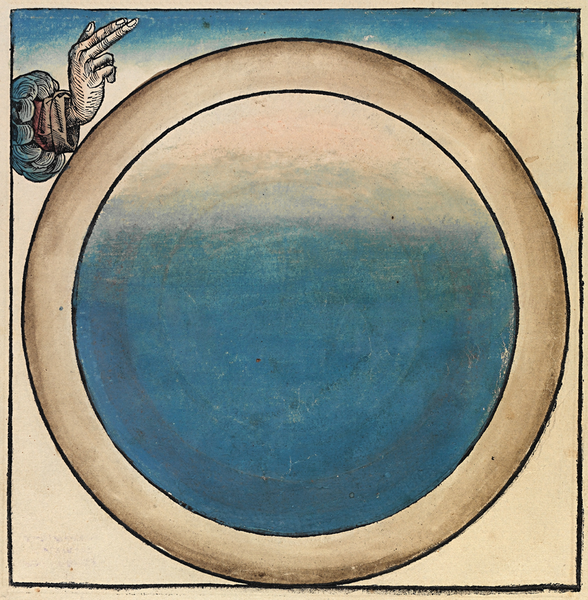
(The image used above is from 1493, and is in the Public Domain in the United States)

The Sacrifice of Jesus — Simplified Scriptures Series

Many Christians have different theories about exactly how the Ransom Sacrifice (also called The Atonement or The Passion) of Christ worked.

Just how did Jesus’ death on the cross 2,000 years ago provide us with salvation, forgiveness, and eternal life?

Some Christians believe that Jesus somehow mystically experienced the full pain and suffering of eternal torment in hell (for every person’s sin who has ever lived), during the 3 hours of darkness when He was hanging upon the cross. Thus, they explain, He “absorbed” all of God’s wrath toward us in Himself, so now God has no wrath left against anyone who puts faith in Jesus.

That sounds really good, until you think about it more carefully, then a few problems come up:

  1. Where does the Bible say anything about Jesus mystically experiencing the torment of Hell for each sinner while on the cross? I haven’t seen that in the Scriptures.
  2. How could Jesus experience an eternity of punishment in just 3 hours? Sounds illogical.

Other Christians think that Jesus made an exchange with God: That He exchanged the perfect offspring He potentially could have fathered, for all of us imperfect sinners instead.

Again though, the problem with this theory is that the Bible doesn’t say anything about this, so it’s just speculation. It does sound logical and plausible though.

The Bible, surprisingly, does not go into detail about how exactly the Sacrifice of Jesus saves us. It does make it clear that it (along with His resurrection) is the most important event in history, God accepted it as an offering, and that faith in His Atonement is what saves us from our sins.

A Fresh View of the Atonement

I propose a fresh view, based on the Scriptures. Christ, at John 3:14-16, said that His Sacrifice saves people just like the Copper Snake on the Pole saved people in Moses’ day.

The Copper Snake itself had no magical or mystical powers. It could not bestow life on anyone. No, rather, it was something God set up as a symbol to test the faith of people, to see who would follow His direction and trust in His way of doing things.

God said that all the people had to do to be saved from the poisonous venom was to trust God’s message and look at the Copper Snake on the Pole. 

In the same way, my view is that the Sacrifice of Jesus didn’t have any magical or mystical powers, but instead, was the symbol that God chose to set up to test the faith of people, to see whether they would humble themselves to accept His message and do things His way, or reject it and do things their own way.

Jesus came to earth to show us the perfect way to live and the perfect way to die, to give us an ideal to strive toward and imitate, and God saves us for having faith in Jesus’ perfect ideal life and death, and in His message of trusting God’s method of salvation instead of our own.

As Paul wrote, God will save those who “follow in the footsteps of the same faith that Abraham had.” (Romans 4:12) Abraham most likely didn’t know all the details of Jesus’ life and death in advance, but Abraham did trust that God’s methods were the best.

God also chose death on a cross as His method of salvation in order to attract the humble and poor, and make a mockery of those who think they are so wise.

I’m not saying there can’t be more to it than this, I’m just saying this is my view, based on what I see in the Bible.

Let’s allow the Apostle Paul to sum things up:

1 Corinthians‬ ‭1‬:‭18-25‬ (NIV): For the message of the cross is foolishness to those who are perishing, but to us who are being saved it is the power of God. 

For it is written: “I will destroy the wisdom of the wise; the intelligence of the intelligent I will frustrate.” Where is the wise person? Where is the teacher of the law? Where is the philosopher of this age? Has not God made foolish the wisdom of the world? For since in the wisdom of God the world through its wisdom did not know him, God was pleased through the foolishness of what was preached to save those who believe. 

Jews demand signs and Greeks look for wisdom, but we preach Christ crucified: a stumbling block to Jews and foolishness to Gentiles, but to those whom God has called, both Jews and Greeks, Christ the power of God and the wisdom of God. For the foolishness of God is wiser than human wisdom, and the weakness of God is stronger than human strength.

1 Corinthians‬ ‭2‬:‭1-9‬ (NIV): When I came to you, I did not come with eloquence or human wisdom as I proclaimed to you the testimony about God. For I resolved to know nothing while I was with you except Jesus Christ and him crucified. I came to you in weakness with great fear and trembling. 

My message and my preaching were not with wise and persuasive words, but with a demonstration of the Spirit’s power, so that your faith might not rest on human wisdom, but on God’s power. We do, however, speak a message of wisdom among the mature, but not the wisdom of this age or of the rulers of this age, who are coming to nothing. 

No, we declare God’s wisdom, a mystery that has been hidden and that God destined for our glory before time began. None of the rulers of this age understood it, for if they had, they would not have crucified the Lord of glory. However, as it is written: “What no eye has seen, what no ear has heard, and what no human mind has conceived” — the things God has prepared for those who love him—

There are GOOD Unbelievers!

(Very important! I have updated my view somewhat on this topic. After reading this post below, please see my newer blog post: Preaching is Important!)

Many Christians today teach that there are only two types of people in the world:

  1. The saved (believers in Jesus) who go to heaven
  2. The lost (unbelievers) who go to hell

I think this is based on a misunderstanding of several Bible passages. Lets look at a few Scriptures:

 “For it is not the hearers of the law who are righteous before God, but the doers of the law who will be justified. For when Gentiles, who do not have the law, by nature do what the law requires, they are a law to themselves, even though they do not have the law. They show that the work of the law is written on their hearts, while their conscience also bears witness, and their conflicting thoughts accuse or even excuse them on that day when, according to my gospel, God judges the secrets of men by Christ Jesus.” (Romans 2:13-16 ESV)

 “For those who live according to the flesh set their minds on the things of the flesh, but those who live according to the Spirit set their minds on the things of the Spirit. For to set the mind on the flesh is death, but to set the mind on the Spirit is life and peace. For the mind that is set on the flesh is hostile to God, for it does not submit to God’s law; indeed, it cannot. Those who are in the flesh cannot please God.” (Romans 8:5-8 ESV)

The Two Types of Unbelievers:

From what I’ve seen, most Christians today use Romans 8:5-8 as support for their idea that all unbelievers are going to hell because they cannot please God.

However, by comparing that passage to the passage from Romans 2 above, we can see clearly that the Apostle Paul believed that there are two different types of unbelievers — Those who obey their God-given conscience and those who set their minds on the evil fleshly desires.

The unbelievers who obey their God-given conscience, the inner moral law written on their hearts by God, may be excused from punishment on the Day of Judgment when Jesus judges their secret thoughts and desires. (Romans 2:13-16) Whereas, the unbelievers who set their minds on the evil flesh instead of the God-given conscience, will not escape punishment. (Romans 8:5-8)

Unbelievers are Condemned for Rejecting Jesus, NOT for Ignorance

The Bible actually teaches that unbelievers are condemned by God after they have received the knowledge of Jesus, but have chosen to reject this truth. Unbelievers are NOT condemned by God if they are truly ignorant and have never received the knowledge of Jesus (with the exception of the evildoers from Romans 8:5-8 who set their minds of evil desires instead of their consciences). Examine the Scriptures below:

 “For God did not send his Son into the world to condemn the world, but in order that the world might be saved through him. 

Whoever believes in him is not condemned, but whoever does not believe is condemned already, because he has not believed in the name of the only Son of God. 

And this is the judgment: the light has come into the world, and people loved the darkness rather than the light because their works were evil. 

For everyone who does wicked things hates the light and does not come to the light, lest his works should be exposed. But whoever does what is true comes to the light, so that it may be clearly seen that his works have been carried out in God.” (John 3:17-21 ESV)

 “Jesus said, ‘For judgment I came into this world, that those who do not see may see, and those who see may become blind.’ Some of the Pharisees near him heard these things, and said to him, ‘Are we also blind?’ Jesus said to them, ‘If you were blind, you would have no guilt; but now that you say, “We see,” your guilt remains.’” (John 9:39-41 ESV)

So we can see Jesus Himself taught that God would judge people based on how much “light” or truth they had received about God and Jesus, and that the basis for condemnation of unbelievers, is whether they had rejected the light that they had been given. If unbelievers have received no light about Jesus, they will not be condemned (unless they set their minds on evil, as Romans 8:5-8 says).
What about Ephesians 2?

Many Christians use Ephesians chapter 2 to show that God views all ignorant unbelievers as evil slaves of Satan, even those who have not heard about Jesus. Look at the relevant verses here:

     “And you were dead in the trespasses and sins in which you once walked, following the course of this world, following the prince of the power of the air, the spirit that is now at work in the sons of disobedience—among whom we all once lived in the passions of our flesh, carrying out the desires of the body and the mind, and were by nature children of wrath, like the rest of mankind.” (Ephesians 2:1-3 ESV)

 “Therefore remember that at one time you Gentiles in the flesh, called “the uncircumcision” by what is called the circumcision, which is made in the flesh by hands—remember that you were at that time separated from Christ, alienated from the commonwealth of Israel and strangers to the covenants of promise, having no hope and without God in the world. 

But now in Christ Jesus you who once were far off have been brought near by the blood of Christ. For he himself is our peace, who has made us both one and has broken down in his flesh the dividing wall of hostility by abolishing the law of commandments expressed in ordinances, that he might create in himself one new man in place of the two, so making peace, and might reconcile us both to God in one body through the cross, thereby killing the hostility. 

And he came and preached peace to you who were far off and peace to those who were near. For through him we both have access in one Spirit to the Father. So then you are no longer strangers and aliens, but you are fellow citizens with the saints and members of the household of God,” (Ephesians 2:11-19 ESV)

If you look very carefully here, especially taking note of Ephesians 2:11, you can see that it is talking about how the Jews view the Gentiles, NOT how God views the Gentiles. Notice how it says that the Gentiles are called “the uncircumcision” by the Jews. Paul is showing how the Jewish believers viewed the Non-Jews.

We know that God has always had a different view of Gentiles than this, because Acts chapter 10 declares this:

 “At Caesarea there was a man named Cornelius, a centurion of what was known as the Italian Cohort, a devout man who feared God with all his household, gave alms generously to the people, and prayed continually to God. About the ninth hour of the day he saw clearly in a vision an angel of God come in and say to him, ‘Cornelius.’ And he stared at him in terror and said, ‘What is it, Lord?’ And he said to him, ‘Your prayers and your alms have ascended as a memorial before God.’” (Acts 10:1-4 ESV)

 “So Peter opened his mouth and said: ‘Truly I understand that God shows no partiality, but in every nation anyone who fears him and does what is right is acceptable to him.’” (Acts 10:34-35 ESV)

So, in summary, Ephesians chapter 2 is speaking about the way that Jews had viewed Gentiles — as being hopeless sinners, outside of the bounds of God’s love, doomed because they were not given God’s Laws. God has always loved the Gentiles (John 3:16)

 “And he made from one man every nation of mankind to live on all the face of the earth, having determined allotted periods and the boundaries of their dwelling place, that they should seek God, and perhaps feel their way toward him and find him. Yet he is actually not far from each one of us,” (Acts 17:26-27 ESV)

What about Romans 3?

At first glance, Romans 3 appears to be a scathing condemnation of ALL unbelievers in all of history:

 “What then? Are we Jews any better off? No, not at all. For we have already charged that all, both Jews and Greeks, are under sin, as it is written: ‘None is righteous, no, not one; no one understands; no one seeks for God. 

All have turned aside; together they have become worthless; no one does good, not even one.’ ‘Their throat is an open grave; they use their tongues to deceive.’ ‘The venom of asps is under their lips.’ ‘Their mouth is full of curses and bitterness.’ ‘Their feet are swift to shed blood; in their paths are ruin and misery, and the way of peace they have not known.’ ‘There is no fear of God before their eyes.’

Now we know that whatever the law says it speaks to those who are under the law, so that every mouth may be stopped, and the whole world may be held accountable to God. For by works of the law no human being will be justified in his sight, since through the law comes knowledge of sin.” (Romans 3:9-20 ESV)

Paul was quoting from Psalms here, and in those Psalms, there was a distinction being made between righteous people and evil people. The Psalms were saying that not one person on earth was righteous except for those who were doing good things, which were few in number. Paul here also applies these Psalms to the Jews, because he says that they apply to those “under the Law.” This would mean Paul’s point is that there are many evil Jews out there, just as bad or worse than any of the Gentiles. This point agrees perfectly with Romans 3:9.

Paul is NOT contradicting himself (from Romans 2:13-16 or Acts 17:26-27) by saying that ALL Gentiles are evil sinners, no, rather, Paul is pointing out that many Jews are evil sinners similar to how the Jews view the Gentiles.

Even if Paul was saying that all human beings on earth were evil sinners who deserved condemnation (which, from above, I don’t think is accurate), look at what Paul says right below in Romans 3:

 “whom God put forward as a propitiation by his blood, to be received by faith. This was to show God’s righteousness, because in his divine forbearance he had passed over former sins.” (Romans 3:25 ESV)

Selective Open Theism

There are many different views on God’s foreknowledge, predestination, prophecies, and free will.

I have recently embraced “Open Theism,” but my view is a customized version of Open Theism which harmonizes with the Scriptures even better (in my humble opinion).

I refer to my view as “Selective Theism” or “Selective Open Theism.” In general, it is the same as Open Theism, with one major difference: 

Open Theism says God cannot know certain things about the future because they haven’t happened yet, and God can’t know in advance what a person with free will would choose to do.

Selective Open Theism says God has the ability to know the future, but He chooses only to selectively know certain things, related to His purposes and prophecies, but blocks out the rest in order to allow free will to play out.

Selective Open Theism does a better job of explaining and harmonizing the fact that God, in the Bible, centuries in advance, predestined that evil men would murder His Son, Jesus, and also predestined that one of Jesus’ close friends would betray Him. (Acts 4:27-28) Otherwise, the alternative option is, that God had to cause the evil men to commit evil and murder Jesus, which would be a violation of James 1:13.

Jesus Himself exercised Selective Foreknowledge at Mark 13:32.

In the Old Testament, God seems to have exercised Selective Foreknowledge many times (Genesis 22:1, 12; Exodus 16:4; Exodus 20:20; many other passages too) where He blocks out future knowledge of free will choices, and has to watch them unfold as they happen.

However, by the same token, there are certain prophecies where God knows the minute, exact details, sometimes centuries in advance! (Daniel 9:24-26; Isaiah 45; 1 Samuel 10:2-16)

This also explains why God changes His mind at times. He discovers things that people are doing (or failing to do), and reacts accordingly. (Jonah 3:9-10; Exodus 32:14; Genesis 6:6-7)

The Bible makes it clear that God CAN change His mind unless He has sworn an oath or made a promise! (Jeremiah 18:6-10; Hebrews 6:17-18)

Now, the question may arise: How can God selectively choose what He wants to know about the future, unless He already knows ALL of the future?

This seems to be a mystery that the Bible simply doesn’t clearly explain. However, it possibly gives hints, if we examine how and when Jesus saw the future when He was on earth.

Each time Jesus saw the future, or spoke about the future of a thing or a person, He was right there with the thing or person. For example, Jesus was looking at the Temple when He foretold the future destruction of that Temple. Jesus was sitting next to Peter when He foretold that Peter would deny Him three times. Jesus was eating bread with Judas when Jesus saw that Judas was about to betray Him.

So, perhaps it is similar with God in heaven. Maybe God’s foreknowledge is triggered when He thinks about certain people or things, and then He can choose to zoom in or zoom out, regarding their future.

(The only other theory I can think of, is that God sees ALL of the future, but then He selects to forget most of it, in order to allow true free will.)

The Old Testament Law of Moses

The Bible makes it very clear that God only gave the Mosaic Law to the Jews for a limited time period, and that these laws included special rules for the culture and circumstances of that time, as well as concessions made for sinful, stubborn people, which did not represent God’s ideal commandments. (Matthew 19:8; Galatians 3:23-29)

The Law of Moses expired and became obsolete after the death and resurrection of Jesus Christ. (Galatians 5:1-4; Hebrews 8:7-13; Romans 10:4)

This, as well as the fact that God tolerated less-than-ideal practices in the Mosaic Law, such as polygamy, incest, slavery, women being treated as property, shows God to be flexible and open to change in His dealings with imperfect, evolving human beings.

The Case for Free Will

The Case for Free Will

From an Atheist’s Perspective

Each of us assumes free will exists whenever we make a logical argument or an appeal to reason. If free will is an illusion, then so is the freedom to logically form an argument using reason. If you aren’t actually choosing to think about the logic of an argument, but instead, you’re only following pre-programmed cause-and-effect, there would be no way of ever knowing if anything is real, and you would never even be able to trust the conclusion that free will is an illusion, since that could be an illusion as well.

Coming to the conclusion that free will is an illusion is self-defeating (since, if it were true, we would never know whether it was actually true) and it goes against all the assumptions we make during logical arguments and using the scientific method. This conclusion destroys the very foundation that was used to arrive at the conclusion.

It therefore seems more logical to come to the conclusion which supports the validity and trustworthiness of logical conclusions, which is the existence of free will.

How Can the Subconscious Brain Choose Things WITHOUT Intention?

People who deny the existence of free will usually say that the subconscious brain selects our thoughts for us, then gives the conscious part of our minds the illusion that we used reason and logic to make a rational choice.

But think about this deeply: How can a part of the brain with NO intentionality, NO goal, and NO plan or purpose, choose to prefer truth over lies, or choose “good” morals over “bad” morals? How can this non-intentional part of your mind select what is rational over what is irrational, without any goal?

This leads directly into our next subheading…

Why Trust Your Subconscious?

If your subconscious has no intentionality, no plan, no purpose, and no goal, why would you trust any of your thoughts to be the truth instead of falsehood? Why would you trust any of your morals to be “good” instead of “bad?”

If your subconscious brain is constantly feeding the conscious brain illusions and lies, why would you believe any of your thoughts given to you by your subconscious?

Do We Have TWO Separate Wills in the Brain?

If you want to claim that your subconscious brain does operate according to its own will, with its own intentionality, plans, and goals, then you aren’t actually denying free will. Instead, what you are claiming is that your brain has TWO wills, one (the subconscious) which has more control over the other, and the conscious mind doesn’t have access to the subconscious mind.

In order for the subconscious brain to have intentionality, it would have to have its own free will, therefore, you still would have free will and intentionality, but somehow this would take place separately from your conscious mind.

So your subconscious has its own plans, and is deceiving your conscious brain so that you don’t get in its way.

I think it’s much simpler (thus following Occam’s Razor) and more logical, to assume that free will actually exists at the conscious level.

From a Biblical Perspective

Despite what many Calvinists and determinists say, the Bible makes it clear that Yahweh highly values and respects the free will that He granted to humans, and He doesn’t like to intervene to alter free will, or the course of history, unless certain thresholds are passed first.

God is love, and love is not possible without freedom to choose to express it. Without free will, “love” would just be a robotic action we were pre-programmed to perform. In fact, every action we take would be determined from eternity past, and God would basically be a puppet-master pulling all the strings, or simply watching things unfold exactly how He already decided they would.

The very first human events recorded in the Scriptures are God having humans go through tests so that they could exercise their free will – Adam and Eve on whether they would eat from the Tree, Cain on whether he would kill Abel or not.

God gave the precious gift of free will to His angels also. A beautiful spirit (commonly called Lucifer), a very high-ranking angel, was granted free will. But he used this free will to turn and attack God in an attempt to be worshiped as God himself. Lucifer harmed many of the other angels and humans in his destructive quest. Lucifer is now known as Satan the Devil. (Isaiah 14:9-20; Ezekiel 28:13-18; Luke 10:18)

Without free will, God had to have programmed Lucifer to rebel, and programmed Adam and Eve to sin, thus God would be the direct cause and architect of all of the evil and suffering we see on earth. This is in direct contradiction to what the Bible says at James 1:13

In addition, it would mean God Himself is very illogical and irrational in getting angry with His creation for doing exactly what He programmed them to do. This would not harmonize with the logical minds He gave us. Plus, many other Scriptures declare that God never does anything immoral or evil.

Also, it goes against how we view ourselves and how we view reality and logic, so even without appealing to the Bible, it doesn’t make sense. If we assume that our moral values were given to us by God, then it would be illogical for a God who has similar morals as we do, to be the author of evil.

To quote “Truth Magazine” on this topic:

“Morality is real only if mankind is free to choose. In a world of fate or determinism, in which all things are predetermined and fixed, mankind has no responsibility.”

God Changes His Mind

The popular modern claim in many Christian churches that “God never changes His mind,” is false and does NOT agree with the Bible.

The Holy Scriptures are actually quite clear that God does indeed change His mind:

* God changed His mind and regretted that He had created mankind because of their evil. (Genesis 6:6)

* The Lord changed His mind and decided not to destroy the Israelites after Moses pleaded with God. (Exodus 32:12-14)

* God changed His mind and told the angel to stop killing people. (2 Samuel 24:16)

* God changed His mind and decided not to annihilate King Rehoboam. (2 Chronicles 12:12)

* God changed His mind and decided not to destroy the city of Nineveh after He told Jonah He would. (Jonah 3:10)

* God promised that He would change His mind in response to humans changing their minds. (Jeremiah 12:15; 18:7-10)

___________________________

The only time God is not free to change His mind, is when He has made a vow, promise, or oath. He views those as unbreakable. (Hebrews 6:17-18)

1 Samuel 15:29 and Numbers 23:19 are declaring that God does not change His mind **like a human does** (in other words, God doesn’t change His mind for no reason, or for fickle/sinful reasons– God isn’t wishy-washy).

What is “Fusion Theism?”

What is Fusion Theism?

This is My Declaration of Fusion Theism

These are the primary principles of the Fusion Theism Movement I am trying to start in all the churches everywhere:
  1. Truth is more important than any tradition or creed.
  2. Truth is on an equal level with kindness, and the two should be balanced together in harmony.
  3. Logic should always be used when reasoning or studying in the Scriptures or anything else. If it is illogical, reject it.
  4. The Holy Scriptures are inspired of God, but not necessarily inerrant, and not all Scripture is of equal importance for us today.
  5. The teachings and words of Jesus Himself take priority over and above any other teachings found in the Bible. (Hebrews 2:1-5)
  6. We must all imitate the example of the Noble-Minded Beroeans, and carefully compare everything we hear from our pastors, preachers, elders, deacons, bishops, overseers, fathers, cardinals, and the Pope, to the inspired Scriptures to make sure it agrees with God’s message. (Acts 17:11)
  7. Modern Bible Translations are good and can be considered “inspired” of God, but they are not infallible or inerrant.
  8. God is never the author of evil thoughts. (James 1:13) Therefore, any belief system that says God ordained evil thoughts should be rejected.
  9. Christians should not divide or stop fellowship over non-essential doctrines. (Romans 14)
  10. I recommend that we should not be looking for hidden, secret meanings in the Bible unless the Scriptures tell us to do so (such as in Revelation), since this would make us more likely to go beyond what is written, and add or take away from God’s clear messages.
  11. God can and does change His mind, and views Himself as free to do so unless He has sworn an oath or made a promise.
  12. God has the ability to see anything He desires to know about the future, but God selectively chooses to use this ability to only know certain things related to His purposes.
  13. The Bible does not teach a literal eternal torment in Hellfire.
  14. Jesus had sinful desires just like we do, yet He never gave into them to commit sin.
  15. All essential beliefs should be based on the inspired holy books and not on the later creeds or councils.
  16. Science, including evolution, should be accepted. God made the universe and told us to observe it. No one observes it better than scientists. Our beliefs should harmonize with modern scientific facts.
  17. The Law of Moses expired when Jesus came to earth as the Messiah, died, was resurrected, and ascended.
  18. Jesus came down from above, sent by God the Father, as a real human, fulfilled the Law, suffered and died for our sins, was buried, rose from the dead, ascended into heaven, and is returning one day.
  19. Jesus is Lord, Mighty God, Savior, Messiah, King, Mediator, High Priest, the Divine Son of God, and the Son of Man sitting at God’s right hand.

Introducing the FEV Bible Version

I am making my own revision/update of the Holy Bible. The New Testament is almost complete. It is called the “Fusion English Version” (FEV). I have posted the Gospel of John on Amazon as a Kindle Book, and it is only 99 cents for a limited time! Check it out here, and your purchase of it will help support this blog, and I would truly appreciate any feedback, comments, suggestions, and critiques.

Notes About This Particular Edition

This Kindle edition of the FEV is the Gospel (Good News) by John the Apostle. Other books of the Bible in the FEV Version will be available in Kindle format soon. Keep checking Amazon.com. Hopefully the entire New Testament will be available by early 2016.

The Goal

The goal of this English Bible, named the “Fusion English  Version” (FEV) or “Fusion Bible” for short, is not to start from scratch on a brand new English Bible translation, but rather, to examine the greatest English Bible versions of the past, and improve them, by creating a “fusion” of the best parts of each great Bible version, along with the best and latest information from Bible scholars, lexicons, dictionaries, commentaries, and scholar notes.

The Starting Point

The basic starting text of the Fusion English Version (FEV) is the public domain “World English Bible” (WEB) version. This Bible version was chosen as my starting point because:

  1.  The WEB Bible is in the public domain, and the author of it gives permission to update/change it as long as the update is re-named and no longer called the “WEB Bible.”
  2. The WEB Bible is an excellent translation, itself being an update and improvement on the masterful 1901 American Standard Version (ASV).

There is no reason to spend years and years to reinvent the wheel, and retread over the same translation from scratch (directly from the Hebrew and Greek manuscripts) which has already been done by much better experts than myself.

The Greek Texts

I have updated the WEB Bible to reflect the opinion of the majority of Greek experts, and the Manuscripts which they trust most.

With that said, my aim is to make this Bible acceptable and beneficial for ALL Christians to use, and so that is why I am including the disputed passages from the Textus Receptus and/or Majority Text. However, due to the majority of Greek scholars and experts saying that the Textus Receptus/Majority Text is not the most accurate of the Manuscripts, I am placing the words from those Manuscripts in double-brackets with the words inside highlighted in orange text, [[ KJV adds: just like this ]].

Significant Updates

You will notice the following important changes, which bring out the meaning of the words in English much more clearly than the traditional renderings:

  • “Christ” and “Messiah” in this edition are “Chosen King” or “Chosen One.”
  • “Heaven” is “the Exalted Realm.”
  • “Angel” is “exalted messenger” or “messenger.”
  • “Baptism” is “immersion.”
  • “Worship” is “give homage.”
  • “Son of Man” is “The New Adam.”
  • “Holy” is “Sacred.”
  • “Spirit” is “invisible force,” “invisible Divine Force,” or “invisible inner force.”
  • “Soul” is “spark of life.”
  • “Sin” is “evil” or “commit evil.”

Colored Text

The words of Jesus are in red letters in this Bible. The words of God are in blue letters.

As noted above, any passages from the traditional Textus Receptus or Majority Text, which are not found in the oldest Greek manuscripts, will be highlighted in orange letters, instead of the normal black text.

Quotations of the Old Testament by writers in the New Testament are in purple letters.

Here’s a helpful little list:

  • Red Letters: The words of Jesus
  • Blue Letters: The words of God
  • Orange Letters: Textus Receptus and Majority Text passages
  • Purple Letters: Quotations of the Old Testament

Quotations of the Old Testament found in the New Testament, are also highlighted by bold and italics, followed by the Scripture number for handy reference.

Pronoun Capitalization

Pronouns referring to God and Jesus are not capitalized in this Bible because, even though I personally like that feature in other Bibles (such as the NASB, NKJV):

  1. I feel that there is less chance of my error in leaving them all uncapitalized. I would hate to mislead anyone by accidentally misinterpreting who is being referred to in a certain unclear passage. I would rather leave that interpretation up to each reader.
  2. Pronouns referring to Deity were not capitalized in the base text I started with (World English Bible).
  3. Pronouns referring to Deity had no unique or special markings in the original Hebrew or Greek texts of the Bible.
  4. I personally think it looks more stylish and easier on the eyes when pronouns are not capitalized.

With that said, there are certain locations in the Bible where the context makes it clear who is speaking, or being spoken to, or about, and in those cases I have replaced the words “he,” “him,” “she,” “her,” etc. with the name of the individual being referred to.

The Divine Name of God

The Divine Name, YHWH, is obviously important to God and the Bible writers, since it was used about 7,000 times in the Old Testament. Therefore, in this FEV Bible, it is rendered as “Lord Jehovah Yahweh” in order to bring out the full impact, significance, and traditional forms of the Name.

Most modern Bible translations follow an ancient Jewish tradition of replacing the Divine Name with “LORD” or “The Eternal” instead. While I appreciate that this is done out of respect, reverence, and fear of misusing the Sacred Name, I believe it to be misguided.

If God didn’t want His Name to be written or spoken, He wouldn’t have inspired the Bible writers to include it almost 7,000 times in the Old Testament.

Scholars disagree on the precise pronunciation and spelling, but “Yahweh” is the most commonly accepted form among experts, and “Jehovah” is the traditional English translation, therefore, I have rendered “YHWH” as “Lord Jehovah Yahweh” in this version.

Full disclaimer:

The FEV is an update of the WEB Bible, however, it is not being done by the same people. The translators of the WEB Bible have no connection to this version, other than the fact that they made an outstanding Bible translation and thankfully decided to place it in the Public Domain.

This FEV Bible is a project done by one person (myself). I am not an expert on the Hebrew or Greek languages. I rely on the lexicons, dictionaries, commentaries, and Bible study notes from a wide-range of scholars and experts, to inform my decisions on making and updating the FEV Bible.

A Preacher’s Bible

Have you ever given a sermon at church, or spoken to someone in-person, teaching from the Bible, and you find yourself “correcting” the text by examining dictionaries, lexicons, commentaries, etc., and then saying “The Greek actually says such-and-such?” Well, that’s what I’ve already done for you with the FEV. That’s why this Bible can accurately be referred to as a “Preacher’s Bible” — it is already pre-corrected with the very best and most accurate information from many of the Bible scholars and experts.

One example: When you read John 3:16 to your flock, you no longer have to explain that many scholars now believe the Greek word “monogenes” doesn’t mean “only-begotten,” but instead “unique,” because the latter phrase is right there in the main Bible text. The FEV’s choice of “unique” is also more accurate and easy-to-understand than referring to Jesus as God’s “only” Son, since the Scriptures make it clear that God has other sons besides Christ.

A Layperson’s Bible

One feature of this version of the Bible is that, instead of including many difficult or archaic words and then providing a dictionary or footnotes to help the reader, the easier-to-understand “lay” definitions are rendered right in the main Scripture text. There’s no point in making Bible reading more difficult than it has to be.

This way the average church-goer (layperson) can understand much more of the Holy Word without having to do tons of research in dictionaries, or have their pastor explain it to them. (There will obviously still be some difficult spots in the Bible where deeper research is required. But this shouldn’t be necessary in every verse)

Translation Philosophy

First, I want to quote the translation philosophy of the WEB Bible (the original text that this Fusion Version was based off of):

“Bible translation (as with any natural language translation) is a balancing act, where the translators seek to preserve the following:

* The meaning of each thought or sentence.
* The meanings of individual words in their context.
* The shades of meaning implied by word forms, tense, etc.
* The impact and tone of each passage.
* The style of the original authors who were inspired by the Holy Spirit.
* Faithfulness to the target language (English, in this case).

Note that some of the above goals are at odds with one another, like preservation of the original style vs. faithfulness to the target language, and expressing the last bit of the shades of meaning vs. preserving the impact. Still, it is possible to retain a good balance.

Different balance points are chosen by different translation committees. Indeed, many translations can be characterized by the weight the translators gave to each of the above items.

For example, The Amplified Bible excels at getting the meaning across, but falls down hard on impact, style preservation, and faithfulness to the target language. The New Living Translation excels at preserving the meanings of entire thoughts, impact, and faithfulness to the target language, but loses some of the style and shades of meaning. The New International Version excels at most of the above, but loses some elements of style and some of the subtleties of wording. The World English Bible attempts to balance all of the above with a fairly literal translation.

Some people like to use the terms “formal equivalent” and “dynamic equivalent.” Neither of these exactly describe what we are doing, since we have borrowed ideas from both, but I suppose that we are closer to formal equivalence than dynamic equivalence.”

The FEV is my update to the WEB. I have clarified and explained words, and in some cases, I’ve improved the wording of whole sentences and paragraphs. I have also brought many Bible verses into harmony with the latest understandings of Bible scholars and experts.

May God be glorified by this version of His Holy Word, and may the Lord bless you as you read and study His Scriptures.

It is Time for ALL Christians to Accept Evolution

It is time for Christians to accept evolution, in my opinion.

There are many reasons why I think it is long overdue for all Christians to finally accept what science says about evolution. Below I will show these reasons.

  1. The Bible tells people to pay attention to nature to see the glory of God (Psalm 19; Romans 1:19-20). No one pays closer attention to nature than scientists. Scientists know far more about nature than the average Christian does. Christians shouldn’t bury their heads in the sand. Therefore, the humble, honest Christian should defer to the experts on nature.
  2. There is no contradiction between what science shows regarding evolution, and what Genesis reveals about God’s creation of the universe. For example, see my other blog post, “You can believe in a Literal Genesis and Evolution.” Also you can google to research other interpretations of Genesis. You should especially visit BioLogos. (For additional reading, please see Allegorical Interpretations of Genesis)
  3. Christians are commanded by the New Testament to be in subjection to the government leaders and officials (Romans 13:1-4), and since they are promoting evolution as scientific fact, we should accept this without fighting, as long as no essential doctrine is at stake.
  4. There is no contradiction between accepting evolution and believing in the Gospel of Jesus Christ. There is no reason you can’t believe in both Jesus saving us from sin and that evolution was the natural process God used to create life on earth.
  5. Publicly opposing or condemning evolution or the scientists who teach it, makes Christianity look very bad and ignorant in the eyes of the world. If we want the world to take us seriously about anything we teach about God or Jesus, then we need to stop making ourselves look like fools when it comes to science.
  6. We don’t want our children or grandchildren falling behind in having the latest scientific knowledge or breakthroughs due to denying the fundamental theories of science, such as evolution.

Yes, You Can Believe in a Literal Genesis AND Evolution

Scientific Harmony Series — The Bible and Science Can Agree

Here is my “Fusion” view on Adam & Eve and Evolution:

  1. God began the process of evolution and natural selection 3.5 billion years ago on earth.
  2. Anatomically-modern humans first evolved about 200,000 years ago in Africa.
  3. Around 15,000 years ago (due to the gaps in Bible genealogies), in Iraq, God decides to make a special Garden Paradise, and He chooses to instantaneously create new animals and new human beings to populate this Garden, as part of Grand Test, which came about after a heavenly war between God and one of His top angels, commonly called Lucifer, who became Satan (“the Serpent”).
  4. Inside the Garden of Eden, everything is a perfect, peaceful utopia, with no animal death, no violence, all animals are herbivores.
  5. God creates Adam instantaneously out of dust and later creates Eve from a transplanted rib from Adam.
  6. Meanwhile, outside of the Garden, evolution and natural selection of animals and humans, along with death, disease, decay, violence, the food chain, continues as it always has.
  7. Naturally-evolved humans were already living for thousands of years before Adam, and that is why Adam’s son, Cain, is afraid that these people will kill him, and that is how Cain found a woman to be his wife, even though Adam had no daughters yet. It also explains how Cain and his wife were able to move to a city that had already been built.
  8. It is possible that Genesis 6 is describing Adam’s descendants (through Seth) having sex with, and marrying, the naturally-evolved women, and this causing much evil in God’s eyes, with people abandoning God.
  9. In any case, if Noah’s Flood was worldwide, then that means God killed off all naturally-evolved humans, and only Adam’s line remains today. If Noah’s Flood was NOT worldwide, then people today derive from both Adam’s line and the naturally-evolved humans.
  10. See, there is no reason to abandon science or a literal Adam, in order to be a Christian.

My Fog-Theory of Genesis Chapter 1

Genesis 1:1: In the beginning God created the heavens and the earth.

No date is given for the creation of the sky/universe or the earth. The Bible simply and beautifully says, “In the beginning…” I accept what science says: The universe is 13+ billion years old, and the earth is 4.54 billion years old. This does not in any way conflict with the Bible.

This is one of the main things science still cannot answer, and perhaps, never will be able to answer — where did our universe come from?

Genesis 1:2:  Now the earth was without shape and empty, and darkness was over the surface of the watery deep, but the Spirit of God was moving over the surface of the water.

The “darkness” here is a very dense, thick fog, which is blocking the sun and moon and stars from being seen clearly in the sky, and made it so dark that shapes of things could not be seen. (The Hebrew word rendered here as “darkness” was often used for fog, and it fits the context) Some modern Bible versions agree with this view. They include the Living Bible and the Voice.

Genesis 1:3:  God said, “Let there be light.” And there was light!

Now God begins to thin out the fog, so that more light can reach the surface. He’s not creating or inventing light here. No, rather, He is causing more light to be visible from the standpoint of someone on earth.

Genesis 1:4:  God saw that the light was good, so God separated the light from the darkness.

God thinned the fog enough that the difference between day and night could be observed.

Genesis 1:5:  God called the light “day” and the darkness “night.” There was evening, and there was morning, marking the first day.

The word “day” can mean “time period” (Keep in mind that Genesis 2:4 uses “day” to refer to “time period” or “era”). In other places in the Bible, it says God views 1,000 human years as one “day” to Him. In Hebrews chapter 4, it claims that “Day 7” of this creation account was STILL ongoing thousands of years later, which would mean each “Day” could be thousands or millions of years long.

I accept what science says: The earth is 4.54 billion years old, and life on earth is 3.5 billion years old.

Genesis 1:6-8:  God said, “Let there be an expanse in the midst of the waters and let it separate water from water. So God made the expanse and separated the water under the expanse from the water above it. It was so. God called the expanse “sky.” There was evening, and there was morning, a second day.

This “expanse” was named “Sky,” so there is really no strong, persuasive reason to believe that the Bible writer thought this “sky” was a hard, solid dome, as some skeptics, critics, and atheists assume. Even if the writer of Genesis did have the ancient idea of a solid dome sky, this doesn’t really cause any theological issues or problems. It would simply mean that the writer held on to to some of the mistaken ancient views of the world and didn’t have access to modern science.

The “waters above” may simply refer to clouds, but it is possible it is referring to a “Cloud Canopy” that existed back then, which God later bursts open to flood the earth with.

Genesis 1:9-10:  God said, “Let the water under the sky be gathered to one place and let dry ground appear.” It was so. God called the dry ground “land” and the gathered waters he called “seas.” God saw that it was good.

Finally, God causes the dry ground to appear. Prior to this, the earth was covered entirely with water.

Genesis 1:11-13:  God said, “Let the land produce vegetation: plants yielding seeds according to their kinds, and trees bearing fruit with seed in it according to their kinds.” It was so. The land produced vegetation — plants yielding seeds according to their kinds, and trees bearing fruit with seed in it according to their kinds. God saw that it was good. There was evening, and there was morning, a third day.

Genesis 1:14-19:  God said, “Let there be lights in the expanse of the sky to separate the day from the night, and let them be signs to indicate seasons and days and years, and let them serve as lights in the expanse of the sky to give light on the earth.” It was so. God made two great lights — the greater light to rule over the day and the lesser light to rule over the night. He made the stars also. God placed the lights in the expanse of the sky to shine on the earth, to preside over the day and the night, and to separate the light from the darkness. God saw that it was good. There was evening, and there was morning, a fourth day.

God is NOT creating the sun, moon, and stars here. He ALREADY created them back in Genesis 1:1, where it says God created the heavens and the earth. “Heavens and earth” was a Hebrew phrase for “the universe.” It is here saying that God is placing them in the sky where they can be visible from the earth. What God is doing is thinning out the dense fog even more, to where the sun, moon, and stars are now clearly visible in the sky from the earth.

Genesis 1:20-23:  God said, “Let the water swarm with swarms of living creatures and let birds fly above the earth across the expanse of the sky.” God created the great sea creatures and every living and moving thing with which the water swarmed, according to their kinds, and every winged bird according to its kind. God saw that it was good. God blessed them and said, “Be fruitful and multiply and fill the water in the seas, and let the birds multiply on the earth.” There was evening, and there was morning, a fifth day.

Genesis agrees with science that sea creatures lived first, prior to any other life on earth.

Genesis 1:24-25:  God said, “Let the land produce living creatures according to their kinds: cattle, creeping things, and wild animals, each according to its kind.” It was so. God made the wild animals according to their kinds, the cattle according to their kinds, and all the creatures that creep along the ground according to their kinds. God saw that it was good.

Skeptics have long claimed there is a discrepancy with science here, with birds being created BEFORE reptiles, however I have discovered now that the Hebrew word (tan-neen’) used in Genesis 1:21, BEFORE birds are mentioned, can indeed mean “snake/reptile.” Thus yet another skeptic/atheist argument is shown to be false.


(As a side-note, I do NOT believe in Biblical inerrancy, where every word must be perfect, or else the entire Bible is false. I don’t subscribe to that belief. This frees me up to have a wider range of possible interpretations without destroying my faith) 
 
Many Christians completely interpret Genesis 1 through 4 or 1 through 6 as an allegory or parable, not intended to teach literal historical events. I can understand the reasoning behind doing so, and it is possible that is the correct way of interpreting Genesis. But I find my “Fusion” interpretation more appealing and accurate in line with how the rest of the Bible quotes Genesis.

If you ever do find a true discrepancy between Genesis and current scientific thought, it is possible that Genesis OR science is simply incorrect on a particular point. I’ll let you decide on that. (Keep in mind that science is absolutely NOT infallible, especially on historical sciences. Scientists are revising and correcting themselves every single day.)

Genesis 1:26-27:  Then God said, “Let us make humankind in our image, after our likeness, so they may rule over the fish of the sea and the birds of the air, over the cattle, and over all the earth, and over all the creatures that move on the earth.” God created humankind in his own image, in the image of God he created them, male and female he created them.Right from the very beginning of the Bible, God proclaims the equality of men and women — they are both equally created in God’s image, reflecting God’s qualities, emotions, logic, and morality.

Genesis 1:28-31:  God blessed them and said to them, “Be fruitful and multiply! Fill the earth and subdue it! Rule over the fish of the sea and the birds of the air and every creature that moves on the ground.” Then God said, “I now give you every seed-bearing plant on the face of the entire earth and every tree that has fruit with seed in it. They will be yours for food. And to all the animals of the earth, and to every bird of the air, and to all the creatures that move on the ground — everything that has the breath of life in it — I give every green plant for food.” It was so. God saw all that he had made — and it was very good! There was evening, and there was morning, the sixth day.

I believe that this is referring to a special instantaneous creation that God performed when He was ready to plant His special Perfect Garden (see Genesis Chapter 2). God let the earth, animals, and humans evolve naturally up to a certain point. Then He stepped in and performed a special instantaneous creation of animals to fill this Garden, and of two perfect human beings to live there in the Garden. Meanwhile, outside the Garden, everything (including evolved humans) continued naturally the way it always had.

The people and animals which God instantaneously created for His Garden, were to live as vegetarians, and there was no death of animals or humans at all inside this Garden (until Adam’s sin). But outside the Garden natural death was taking place like it always had.

(I am only throwing this out there as an open-minded possibility to ponder: The Hebrew word for “heavens” can mean the “sky” or atmosphere, instead of outer space or God’s spiritual realm. If this is the case here, it is *possible* that “Elohim” could be a race of extraterrestrial beings (“aliens”) who terraformed earth, seeded life, and initiated evolution, then visited us again thousands of years later.)

(All Scripture references are from the NET Bible)
_____________________________________________________
{Photo Credit: “Adam na restauratie” by Michelangelo Buonarroti – Transferred from nl.wikipedia. Licensed under Public Domain via Wikimedia Commons – http://commons.wikimedia.org/wiki/File:Adam_na_restauratie.jpg#/media/File:Adam_na_restauratie.jpg}