The spirit moves me

The Hebrew and Greek words for “spirit” have the basic meaning of “invisible force.”

The inspired prophet Isaiah said that God’s “spirit” would rest upon the future Servant-Messiah, and that this “spirit” would be a “spirit” of wisdom, understanding, counsel, mightiness, knowledge, and deep respect for God. (Isaiah 11:1-2)

In that context, “spirit” means “attitude,” “disposition,” “deepest thoughts,” or “inclination.” The Apostle Paul used “spirit” in the same way several times in his inspired letters to the early congregations.

For example, Romans 8:15 says “You did not receive a spirit of slavery causing fear again, but you received a spirit of adoption as sons.” 1 Corinthians 4:21 says “Shall I come to you with…mildness of spirit?”

The best example I can think of is 1 Corinthians 2:11-12, where Paul says that God’s “spirit” is just like a human’s “spirit” inside, and that it is by this inner “spirit” that a person examines his own thoughts. This “spirit” is not a separate person but is a part of yourself, your deepest thoughts or attitude.

Paul uses “spirit” in a different way in 1 Corinthians 14:14-16, where he uses that word to mean either his deepest feelings and emotions or the invisible “soul” that resides inside.

James, the brother of the Lord Jesus, said that “the body without the spirit is dead.” (James 2:26) Here, James is using the word “spirit” just like Solomon did in Ecclesiastes 12:7, referring to the invisible inner “breath of life” or “soul” (Genesis 2:7) that God has placed inside living beings which keeps them alive.

Over and over again in the entire Bible, we can see the word “spirit” referring either to (1) the deepest thoughts/attitude of a person, (2) the inner emotions, or (3) the “breath of life” that God uses to keep us alive.

The word “spirit” also can mean the nature of existence or the nature of a body which is different from humans (i.e., invisible, has no flesh and blood, etc.) This is why demons and angels, God, and Jesus are all called “spirit” in the Bible.

Tradition within Christianity causes many Bible translators to overlook or ignore the context of a verse, and render the vast majority of “spirit” references as being “The Holy Spirit,” “the Third Person of the Holy Trinity.” But, as you can clearly see, we should always look closely at the context to get our beliefs correct.

Matthew 5:17-19 — Simplified Scriptures Series

The most-often misinterpreted Scripture I see on Twitter, is Matthew 5:17-19, where atheists twist this passage out of context in order to have a pretext to claim the Bible contradicts itself, and provide a reason for atheists to focus 95% of their attacks on the Old Testament instead of the New.

But it’s not just atheists misinterpreting this passage, it’s also Christians who use this as support for keeping the Old Law of Moses.

Here is Matthew 5:17-19 in the NIV Bible:

“Do not think that I have come to abolish the Law or the Prophets; I have not come to abolish them but to fulfill them. For truly I tell you, until heaven and earth disappear, not the smallest letter, not the least stroke of a pen, will by any means disappear from the Law until everything is accomplished. Therefore anyone who sets aside one of the least of these commands and teaches others accordingly will be called least in the kingdom of heaven, but whoever practices and teaches these commands will be called great in the kingdom of heaven.

The Correct Interpretation of Matthew 5:17-19, In Context:

We can find the correct interpretation by comparing Luke’s account of the words Jesus spoke at Matthew 5:17-19:

LUKE 16:16-17 (NET): “The law and the prophets were in force until John; since then, the good news of the kingdom of God has been proclaimed, and everyone is urged to enter it. But it is easier for heaven and earth to pass away than for one tiny stroke of a letter in the law to become void.”

Jesus’ words are clearer and easier to understand in Luke’s Gospel than in Matthew’s, on this particular topic. When compared together, we can see Jesus teaching us that (in God’s eyes) the Law of Moses was only in force until John the Baptist (compare Matthew 3:15), and since the time of John, Jesus the Author of the New Covenant, is able to change, edit, remove, or keep any parts of the Law He chooses. That is why we see Jesus editing, updating, and removing the Laws of Moses in Matthew 5:21-41, 19:7-9, and Mark 7:19.

Jesus did NOT say “heaven and earth would be destroyed before the Law is abolished,” no, rather, what He actually said is that it is easier for heaven and earth to be destroyed than for the Old Law to be abolished WITHOUT being fulfilled. Reading comprehension is very important when studying the Bible; equally important is reading in-context.

Jesus is promising to preserve the written words of the Old Testament until every prophecy and allegorical foreshadowing is fulfilled (brought to completion). He came to earth to fulfill the written words and bring them to completion. In Matthew 5, Jesus nullifies some of the Laws of Moses, edits others, and keeps some in force, while giving the true, original, deeper meaning of them.

Jesus did keep many of the Laws of Moses in force (albeit, in somewhat different forms) up until His death and Resurrection, at which time the entire written Law of Moses was “nailed to the Cross,” “taken out of the way,” and “made obsolete.” (Colossians 2:14; Ephesians 2:14-16; Hebrews 8:13)

The Law of Moses was never intended to be permanent, but was always just a temporary stopgap until the Messiah arrived (Galatians 3:23-26; Jeremiah 31:31-33), and it contained things which were NOT God’s ideal standards (Matthew 19:7-9; Hebrews 8:7-8).

The Apostle Paul forcefully and repeatedly drove home the point that Christians are NOT obligated to obey the Law of Moses (Romans 4:13-14; Romans 10:4; Galatians 3:1-14; Galatians 4:8-12).

I’ll wrap this up by quoting Paul’s words from Galatians 5:1-6 (NET):

For freedom Christ has set us free. Stand firm, then, and do not be subject again to the yoke of slavery. Listen! I, Paul, tell you that if you let yourselves be circumcised, Christ will be of no benefit to you at all! And I testify again to every man who lets himself be circumcised that he is obligated to obey the whole law. You who are trying to be declared righteous by the law have been alienated from Christ; you have fallen away from grace! For through the Spirit, by faith, we wait expectantly for the hope of righteousness. For in Christ Jesus neither circumcision nor uncircumcision carries any weightthe only thing that matters is faith working through love.

The Living Word of God — Simplified Scriptures Series

Many people see a contradiction when they read Psalm 19 or 119, which seem to say that God’s “Law” or “Word” is eternal, and then compare that to Hebrews chapter 8 or the epistle of Galatians in the New Testament, which says that God’s Law from the Old Testament has expired. Upon closer examination, this is not a contradiction at all.

There is a misunderstanding in too many churches today, where they teach that the “Word of God” refers just to the written Scriptures or the Law of Moses.
Let’s look at what the Holy Bible actually has to say about what “God’s Word” really is:
The Living Word of God
  • The Apostle Peter wrote that the “Word of God” created the world, brought the Great Flood, and will one day bring about the Great Tribulation. (2 Peter 3:5-7) The epistle to the Hebrews also says that God’s Word created the universe and that the powerful Word of Jesus sustains the universe. (Hebrews 11:3; Hebrews 1:3)
  • The Psalms in the Old Testament proclaim the same thing: The universe was created by “The Word of God.” (Psalm 33:6)
  • In addition, according to John the Apostle, Jesus Christ’s name in heaven was “The Word of God.” (John 1:1-3; Revelation 19:13)
  • Hebrews 4:12-13 declares that “the Word of God” is alive and powerful, and that we will stand before Him to explain our actions.
So we can see that the phrase “Word of God” or “God’s Word” can have different meanings in different contexts.
In some contexts, “The Word of God” means God’s creative power or dynamic energy to accomplish His purpose, or to His principles and commands He gives us in our consciences. Sometimes it is the intuition or leading of the Holy Spirit in our hearts. In other contexts, the phrase refers to Jesus Christ. In still other places, “the Word” does refer to the written Bible. But none of the verses above make any sense if they are referring only to the written Scriptures or to the Law of Moses. This is why “context is king.”
Now we’ll check out Psalm 19 and 119 to determine what is meant by “the Word of God” in those contexts:
Psalm 19:1-4 (NET): “The heavens declare the glory of God; the sky displays his handiwork. Day after day it speaks out; night after night it reveals his greatness. There is no actual speech or word, nor is its voice literally heard. Yet its voice echoes throughout the earth; its words carry to the distant horizon.”
MY COMMENTS: Here is a beautiful and poetical way of expressing the idea that God’s creation reveals His glory. In this context, God’s “Word” is being “spoken” without actual audible words by nature itself. This is not speaking of the written Scriptures. So “God’s Word” can refer to God’s created universe revealing His majesty and power to us.

_________________

Psalm 19:4-7 (NET):In the sky he has pitched a tent for the sun. Like a bridegroom it emerges from its chamber; like a strong man it enjoys running its course. It emerges from the distant horizon, and goes from one end of the sky to the other; nothing can escape its heat. The law of the Lord is perfect and preserves one’s life. The rules set down by the Lord are reliable  and impart wisdom to the inexperienced.”

MY COMMENTS: But now the imagery shifts and “God’s Word” or “law” is referring to the laws of nature God established by His Holy Spirit. These natural laws control the rotation of the earth, bringing about the rising and setting of the sun. This same “law” of God’s Spirit also breathes life and imparts wisdom into human beings. This is not speaking of the written Scriptures. So “God’s Word” can refer to the power of the Holy Spirit in establishing the natural laws, giving life to humans, or imparting wisdom to us (for example, through our consciences).
___________________

Psalm 19:8-11 (NET):“The Lord’s precepts are fair and make one joyful. The Lord’s commands are pure and give insight for life. The commands to fear the Lord are right and endure forever. The judgments given by the Lord are trustworthy and absolutely just. They are of greater value than gold, than even a great amount of pure gold; they bring greater delight than honey, than even the sweetest honey from a honeycomb. Yes, your servant finds moral guidance there; those who obey them receive a rich reward.”

MY COMMENTS: The meaning of “God’s Word” shifts again here. Now the discussion changes to focus on the “Word of God” speaking moral guidance into your conscience through the Holy Spirit. This can refer to God’s written Scriptures, but more likely, in this context, is speaking of the human conscience being enlightened by the Holy Spirit (compare also Psalm 19:12-14).
___________________

Psalm 119:89-96 (NET): “O Lord, your instructions endure; they stand secure in heaven. You demonstrate your faithfulness to all generations. You established the earth and it stood firm. Today they stand firm by your decrees, for all things are your servants. If I had not found encouragement in your law, I would have died in my sorrow. I will never forget your precepts, for by them you have revived me. I belong to you. Deliver me! For I seek your precepts. The wicked prepare to kill me, yet I concentrate on your rules. I realize that everything has its limits, but your commands are beyond full comprehension.”

MY COMMENTS: In this context, “God’s Word” or “Instruction,” is speaking of the natural laws which govern the universe and by which God formed the earth. God established these natural laws by His command. The psalmist here expresses his desire to follow and obey the commands of God, which, as we will see below, include God giving a special message and promise to the psalmist.
__________________

 
Psalm 119:114-117 (NET): “You are my hiding place and my shield. I find hope in your word. Turn away from me, you evil men, so that I can observe the commands of my God. Sustain me as you promised, so that I will live. Do not disappoint me! Support me, so that I will be delivered. Then I will focus on your statutes continually.”
 
MY COMMENTS: Here, “God’s Word” refers to a special promise which God made to this psalmist, to save his life. So the “Word,” “law,” “statutes,” and “commands” in this passage are God’s messages and promises given directly to this psalmist. This is not speaking of the written Scriptures.
________________
Psalm 119:122-123 (NET): “Guarantee the welfare of your servant! Do not let the arrogant oppress me! My eyes grow tired as I wait for your deliverance, for your reliable promise to be fulfilled.”
MY COMMENTS: Again, in this passage, “God’s Word” is a special promise of deliverance given to this psalmist. This is not referring to the written Scriptures.
_______________
In summary:
Don’t assume that the expression “Word of God” or “God’s Word” refers to the written Scriptures. Instead, examine the context to see what it actually means.

God’s Predestination — Simplified Scriptures Series

This is crazy, I know! But I am going to agree with Calvinists (to some degree) — God did use predestination to select certain elect people to believe in Jesus!

The thing Calvinists (and many other Christians) don’t understand, is that the Bible says that God only predestined the FIRST Jewish believers in Christ and/or the FIRST generation of disciples, not all believers for all time.
Look at what the Scriptures say on this:
Ephesians 1:4-5, 11-12 (ESV) even as he chose us in him before the foundation of the world, that we should be holy and blameless before him. In love he predestined us for adoption as sons through Jesus Christ, according to the purpose of his will, In him we have obtained an inheritance, having been predestined according to the purpose of him who works all things according to the counsel of his will, so that we who were the first to hope in Christ might be to the praise of his glory.”
Notice — and this is very important! — the Bible here says that God predestined those who were the first to hope in Christ, that is, the first Jewish Christians, including the Apostles.
The very next verse (Ephesians 1:13) makes a clear distinction between the predestined first Jewish Christian believers, and the Gentiles who believed in Jesus later on. The Bible does NOT use the word “predestined” or the word “foreknew” in reference to the later generations of Gentile believers, but always for the Jews chosen by God, or perhaps also for the first generation of Gentile believers. (See Romans 11:1-2; Romans 8:23-30)
This by itself may not seem convincing enough for you, however, just take a look at the following verses:
2 Thessalonians 2:13 (ESV) But we ought always to give thanks to God for you, brothers beloved by the Lord, because God chose you as the firstfruits to be saved, through sanctification by the Spirit and belief in the truth.”
James 1:18 (ESV) “Of his own will he brought us forth by the word of truth, that we should be a kind of firstfruits of his creatures.”
James 1:1 says that his letter was written to the Jewish Christians, so James 1:18 means the Jews who believed in Jesus are the “firstfruits.” 
The Apostle Peter drives home this point, preaching that God had pre-selected those early Jewish believers whom would be the eyewitnesses of Jesus’ resurrection:
Acts 10:41 (NIV): He was not seen by all the people, but by witnesses whom God had already chosen—by us who ate and drank with him after he rose from the dead.
Paul says something similar, that God had chosen him to be His servant before Paul was even born:
Galatians 1:15-16 (NIV): But when God, who set me apart from my mother’s womb and called me by his grace, was pleased to reveal his Son in me so that I might preach him among the Gentiles, my immediate response was not to consult any human being.
At 2 Thessalonians 2:13, Paul was either referring to the Jewish believers in Thessalonica as “the firstfruits,” or he was using that term to describe the first generation of all believers in the city of Thessalonica.
In addition, Romans 8:23-30 and Romans 11:1-2 appears to be saying that Jewish people are the ones whom God “foreknew” and “predestined,” and 8:23 shows that these believers who were predestined are the “firstfruits” because they have the “firstfruits of the Holy Spirit” inside of them.

In Romans, Paul repeatedly points out that Jewish Christians are “first,” then Gentile Christians:
Romans 1:16 (NIV): “For I am not ashamed of the gospel, because it is the power of God that brings salvation to everyone who believes: first to the Jew, then to the Gentile.”

Romans 2:10 (NIV): “but glory, honor and peace for everyone who does good: first for the Jew, then for the Gentile.”
 
This agrees with the New Testament calling Jewish disciples of Christ “the firstfruits.

Revelation 14:4 also says “the firstfruits” are Jews who believe in Jesus. This is a consistent message throughout the New Testament.
Our Lord Jesus said that only certain of the Jewish people were drawn by God to become the early disciples of Christ:
John 6:44-45 (NIV): “No one can come to me unless the Father who sent me draws them, and I will raise them up at the last day. It is written in the Prophets: ‘They will all be taught by God.’ Everyone who has heard the Father and learned from him comes to me.
John 6:64-65 (NIV): Yet there are some of you who do not believe.” For Jesus had known from the beginning which of them did not believe and who would betray him. He went on to say, This is why I told you that no one can come to me unless the Father has enabled them.”
This harmonizes perfectly with what Paul said regarding God only selecting a certain remnant of Jewish believers to become disciples and be saved:
Romans 11:1-6 (NIV): I ask then: Did God reject his people? By no means! I am an Israelite myself, a descendant of Abraham, from the tribe of Benjamin. God did not reject his people, whom he foreknew. Don’t you know what Scripture says in the passage about Elijah—how he appealed to God against Israel: “Lord, they have killed your prophets and torn down your altars; I am the only one left, and they are trying to kill me”? And what was God’s answer to him? “I have reserved for myself seven thousand who have not bowed the knee to Baal.” So too, at the present time there is a remnant chosen by grace. And if by grace, then it cannot be based on works; if it were, grace would no longer be grace.
So we can see that God predestined and foreknew certain of the original Jewish disciples and the first generation of Christians, but what did Jesus say about future believers?
John 12:32 (ESV)And I, when I am lifted up from the earth, will draw all people to myself.
Revelation 22:17 (HCSB): Both the Spirit and the bride say, “Come!” Anyone who hears should say, “Come!” And the one who is thirsty should come. Whoever desires should take the living water as a gift.

Who is Babylon the Great Whore? — Simplified Scriptures Series

I just re-read Revelation again (in the New Century Version this time), and this time, it clicked in my head that “Mystery Babylon the Great, the Great Harlot” sounds an awful lot like the Sadducees and Pharisees who killed Jesus and persecuted the Apostles, and tried to suck up to Rome.

Paul spoke about a Jerusalem Below and a Jerusalem Above, in Galatians. Jerusalem Below are the fleshly and evil Jews (such as the Sadducees and Pharisees who plotted to have Jesus killed) and Jerusalem Above is the Church made up of Christian Jews and Gentiles, the Seed of Abraham in Christ, along with the holy angels, Jesus, and God. (Galatians 4:22-31; Hebrews 12:22-23)

Revelation also picks up on this theme by declaring there is a New Jerusalem (Revelation 21:2; Revelation 3:12), while also declaring that the earthly city of Jerusalem, which killed Jesus, is called Sodom and Egypt in a symbolic way. (Revelation 11:8) So it would make good logical sense for Revelation to continue using this symbolic language to refer to sinful earthly Jerusalem as “Babylon,” to go with “Sodom” and “Egypt.”

Furthermore, Revelation repeatedly describes Babylon as being an unfaithful adulteress and Harlot. Usually in the New Testament, these phrases are figuratively used to refer to God’s people who have become worldly and unfaithful. This would fit in with the Jerusalem Below Paul spoke of in Galatians, but I don’t know how this would fit with the belief some people have that Babylon was Rome. Plus, Babylon is said to be riding the Beast, which was Rome, therefore, Babylon logically would have to be a different entity from Rome.

The Old Testament prophets of God consistently referred to Jerusalem and Israel as an unfaithful harlot:

Isaiah 1:21 NIV: “See how the faithful city has become a prostitute! She once was full of justice; righteousness used to dwell in her— but now murderers!”

Jeremiah 2:20 NIV: ““Long ago you broke off your yoke and tore off your bonds; you said, ‘I will not serve you!’ Indeed, on every high hill and under every spreading tree you lay down as a prostitute.”

Finally, what Revelation says about Babylon being responsible for all the blood of the prophets and apostles matches what Jesus told the Pharisees in Matthew 23:31-38.

Revelation‬ ‭18:24‬ ‭NIV‬: “In her [Babylon] was found the blood of prophets and of God’s holy people, of all who have been slaughtered on the earth.””

Matthew 23:34-38 NIV: Therefore I am sending you prophets and sages and teachers. Some of them you will kill and crucify; others you will flog in your synagogues and pursue from town to town. And so upon you will come all the righteous blood that has been shed on earth, from the blood of righteous Abel to the blood of Zechariah son of Berekiah, whom you murdered between the temple and the altar. Truly I tell you, all this will come on this generation. “Jerusalem, Jerusalem, you who kill the prophets and stone those sent to you, how often I have longed to gather your children together, as a hen gathers her chicks under her wings, and you were not willing. Look, your house is left to you desolate.”

The Jewish leaders’ “house” being abandoned refers to the destruction of the Temple by the Roman armies, and this would harmonize perfectly with the Roman Beast turning and attacking its rider (Babylon), and destroying her with fire.

Revelation 17:16-17 NIV: The beast and the ten horns you saw will hate the prostitute. They will bring her to ruin and leave her naked; they will eat her flesh and burn her with fire. For God has put it into their hearts to accomplish his purpose by agreeing to hand over to the beast their royal authority, until God’s words are fulfilled.

With that said, it is possible that Mystery Babylon represents all wicked apostate religious leaders from the 1st Century all the way until our day, and it referred to the Sadducees and Pharisees in the first application since they were the main religious leaders of that time.

I’d love to see your thoughts on this.

[Photo is in the Public Domain]

Trinity Doctrine – Simplified Version

Without going beyond what is written in the Bible, we can all put faith in a Simplified Trinity, based solely on the Scriptures:

  • The Father and the Son are different Persons. (John 8:16-18; John 1:18)
  • The Father and the Son are divine and can be called “God.” (John 1:1; John 1:18; John 20:28)
  • They deserve our honor, praise, and homage. (John 5:23; Revelation chapter 5)
  • There may be a mysterious Third Person in certain Scriptures called the Holy Spirit. (John chapters 14 through 16; Matthew 28:19)
  • The Father is the ultimate One in charge and above all and greater than all. (John 14:28; John 10:29; 1 Corinthians 15:24-28)
  • Ever since His resurrection and ascension, Jesus has been granted Almighty power and authority from God the Father. (Matthew 28:18; Revelation 22:12-13)

We can add more to these beliefs from the Holy Scriptures, as long as we don’t drift away beyond what is written.

“This Generation Shall Not Pass Away” — Simplified Scriptures Series

When Jesus was giving His famous Olivet Prophecy about the signs of His return and the destruction of the Jewish Temple, He also made this statement, as recorded in Matthew, Mark, and Luke:

“Now learn this lesson from the fig tree: As soon as its twigs get tender and its leaves come out, you know that summer is near. Even so, when you see all these things, you know that it is near, right at the door. Truly I tell you, this generation will certainly not pass away until all these things have happened. Heaven and earth will pass away, but my words will never pass away.”

For those Christians who believe all of the things foretold in the Olivet Prophecy happened by 70 A.D., this Scripture fits perfectly and poses absolutely no problems.

But, for Christians who think this prophecy has a future fulfillment, how would Jesus’ words apply now, about “this generation” not passing away?

There are a number of different valid interpretation options open to you. They are:

  • This Generation” simply refers to all Christians in the churches, who have replaced the nation of Israel as God’s “chosen race.” Jesus was saying there would always be some faithful Christians on earth. (Matthew 28:20; 1 Peter 2:9; Matthew 16:18)
  • This Generation” could start with the outbreak of the Great Tribulation. In this case, Jesus was just reassuring His disciples that the Tribulation wouldn’t last for many decades or centuries. (1 Thessalonians 5:1-5)
  • This Generation” possibly refers to wicked religious leaders/clergy such as the Pharisees. Jesus was saying unfortunately bad religious leaders would always be with us until the Tribulation. (Acts 20:29; Matthew 23:35-36)
  • This Generation” might refer to the foundation of the “Disgusting Thing” (revived Roman Empire / European Union / United Nations / future kingdom of Antichrist).
  • This Generation” perhaps was referring to the Jewish people. As part of God’s unconditional promise to Abraham, God feels obligated to keep some Jews alive at all times so they have the opportunity to hear the Good News and be saved. (Romans 11)
  • Finally, one popular interpretation, at least in America, is that “this Generation” began when Israel became a nation again in 1948, or when Israel took control of Jerusalem in 1967.

Who or What is the Holy Spirit? — Simplified Scriptures Series

Tradition within Christianity has long been that any time the phrases “Holy Spirit,” “Holy Ghost,” or “Spirit of God” are used in the Bible (especially in the New Testament), it always refers to the mysterious Third Divine Person of the Trinity, who is fully God, Co-Equal to the Father and Son, yet somehow distinct.

I want to present a simplified alternative view: Let the context determine the meaning!

(One thing to keep in mind is that the meaning of the Bible words used for “spirit” basically is “unseen force” or “invisible presence.”)

The Holy Spirit as the Mind and Personality of God

 1 Corinthians 2:10-12 (NIV): These are the things God has revealed to us by his Spirit. The Spirit searches all things, even the deep things of God. For who knows a person’s thoughts except their own spirit within them? In the same way no one knows the thoughts of God except the Spirit of God. What we have received is not the spirit of the world, but the Spirit who is from God, so that we may understand what God has freely given us.

In this context, we can clearly see that Paul is viewing the “Spirit of God” as God’s mind, personality, heart, or deep inner thoughts, exactly like he uses the term “spirit of a person within them.” The “spirit” inside of a person is not a distinct person, no, instead it is a part of you. Paul is not, in this context, envisioning the Spirit of God as a Third Person who is distinct or separate from God.

The Holy Spirit as Jesus

2 Corinthians 3:14-18 (NIV): But their minds were made dull, for to this day the same veil remains when the old covenant is read. It has not been removed, because only in Christ is it taken away. […] But whenever anyone turns to the Lord, the veil is taken away. Now the Lord is the Spirit, and where the Spirit of the Lord is, there is freedom. And we all, who with unveiled faces contemplate the Lord’s glory, are being transformed into his image with ever-increasing glory, which comes from the Lord, who is the Spirit.

In this context, Paul is clearly saying that Jesus is “the Spirit” that he is speaking about. This fits in perfectly with a couple other Scriptures:

1 Corinthians 15:45 (NIV): So it is written: “The first man Adam became a living being”; the last Adam, a life-giving spirit.

1 Peter 3:18 (NIV): For Christ also suffered once for sins, the righteous for the unrighteous, to bring you to God. He was put to death in the body but made alive in the Spirit.

In those particular Bible verses, it is referring to Jesus as “the Spirit.”

The Holy Spirit as God the Father

John 4:24 (NIV): God is spirit, and his worshipers must worship in the Spirit and in truth.

There, Jesus refers to His Father as “spirit,” but the context shows He is referring to God’s nature or essence. He was not using “spirit” as a name or title of God here. He was saying God is a spirit being, like angels and demons are called spirits.

Acts 5:3-4 (NIV): Then Peter said, “Ananias, how is it that Satan has so filled your heart that you have lied to the Holy Spirit and have kept for yourself some of the money you received for the land? Didn’t it belong to you before it was sold? And after it was sold, wasn’t the money at your disposal? What made you think of doing such a thing? You have not lied just to human beings but to God.

Here, Peter is using the phrase “the Holy Spirit” as another name or title for God. There’s no hint in this passage that Peter was saying God and the Holy Spirit were two different Persons, in this particular context.

The Holy Spirit as an Angel

Acts 8:26-29 (NIV): Now an angel of the Lord said to Philip, “Go south to the road—the desert road—that goes down from Jerusalem to Gaza.” So he started out, and on his way he met an Ethiopian eunuch, an important official in charge of all the treasury of the Kandake (which means “queen of the Ethiopians”). This man had gone to Jerusalem to worship, and on his way home was sitting in his chariot reading the Book of Isaiah the prophet. The Spirit told Philip, “Go to that chariot and stay near it.”

In this context, we can see that “the Spirit” was “an angel of the Lord,” not necessarily a mysterious Third Divine Person within the Godhead.

Acts 10:3, 19-20, 22 (NIV): One day at about three in the afternoon he had a vision. He distinctly saw an angel of God, who came to him and said, “Cornelius!” […] While Peter was still thinking about the vision, the Spirit said to him, “Simon, three men are looking for you. So get up and go downstairs. Do not hesitate to go with them, for I have sent them.” […] The men replied, “We have come from Cornelius the centurion. He is a righteous and God-fearing man, who is respected by all the Jewish people. A holy angel told him to ask you to come to his house so that he could hear what you have to say.”

Again, we can see that “the Spirit” who was talking to both Cornelius and Peter, was a holy angel of God in this context.

The Holy Spirit as God’s Power or Energy

Micah 3:8 (NIV): But as for me, I am filled with power, with the Spirit of the Lord, and with justice and might, to declare to Jacob his transgression, to Israel his sin.

Luke 1:35 (NIV): The angel answered, “The Holy Spirit will come on you, and the power of the Most High will overshadow you. So the holy one to be born will be called the Son of God.

Acts 1:8 (NIV): But you will receive power when the Holy Spirit comes on you; and you will be my witnesses in Jerusalem, and in all Judea and Samaria, and to the ends of the earth.”

1 Corinthians 5:4 (NIV): So when you are assembled and I am with you in spirit, and the power of our Lord Jesus is present,

1 Thessalonians 1:5 (NIV): because our gospel came to you not simply with words but also with power, with the Holy Spirit and deep conviction. You know how we lived among you for your sake.

In those Scriptures, we can see that the phrase “Holy Spirit” or “Spirit of God” is linked with the power of God or the power of Jesus. The context in these verses would not require you to interpret this “Spirit” as a Third Divine Person.

The Holy Spirit as a Mysterious Divine Person

There are some Scriptures where the Holy Spirit does indeed appear to be a mysterious Third Divine Person, distinct from the Father and the Son. Could this Person be an angel, such as Gabriel? Or is it somehow a part of God’s nature with its own separate mind? I will let you decide:

John 14:16-17 (NIV): And I will ask the Father, and he will give you another advocate to help you and be with you forever— the Spirit of truth. The world cannot accept him, because it neither sees him nor knows him. But you know him, for he lives with you and will be in you.

John 15:26 (NIV): When the Advocate comes, whom I will send to you from the Father—the Spirit of truth who goes out from the Father—he will testify about me.

John 16:13-15 (NIV): But when he, the Spirit of truth, comes, he will guide you into all the truth. He will not speak on his own; he will speak only what he hears, and he will tell you what is yet to come. He will glorify me because it is from me that he will receive what he will make known to you. All that belongs to the Father is mine. That is why I said the Spirit will receive from me what he will make known to you.”

Matthew 28:19 (NIV): Therefore go and make disciples of all nations, baptizing them in the name of the Father and of the Son and of the Holy Spirit,

In conclusion, the phrase “Holy Spirit” and “Spirit of God” can mean many different things, and it always depends on the context.

(Picture Credit: “Rom, Vatikan, Basilika St. Peter, Die Taube des Heiligen Geistes (Cathedra Petri, Bernini)” by Dnalor 01 – Own work. Licensed under CC BY-SA 3.0 at via Wikimedia Commons – https://commons.wikimedia.org/wiki/File:Rom,_Vatikan,_Basilika_St._Peter,_Die_Taube_des_Heiligen_Geistes_(Cathedra_Petri,_Bernini).jpg#/media/File:Rom,_Vatikan,_Basilika_St._Peter,_Die_Taube_des_Heiligen_Geistes_(Cathedra_Petri,_Bernini).jpg )

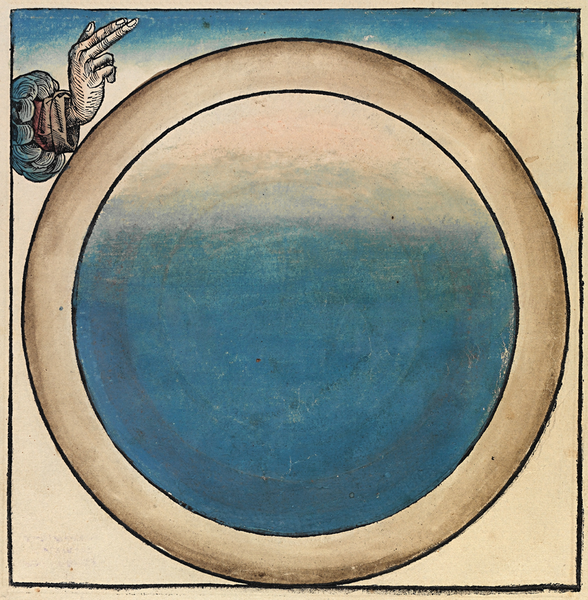
Genesis as a Parable — Simplified Scriptures Series


Jesus always spoke to the crowds using parables. In fact, the Bible says Jesus would never speak to the crowds without using parables.

A parable is a fictional story that is used to teach deep moral and spiritual truths.

The Scriptures say:

Matthew 13:34-35 (NIV): Jesus spoke all these things to the crowd in parables; he did not say anything to them without using a parable. So was fulfilled what was spoken through the prophet: “I will open my mouth in parables, I will utter things hidden since the creation of the world.”

With that being the case, wouldn’t it make sense that other Bible stories “from the creation of the world” might also be parables?

I present to you, as a simplified explanation, that the stories in Genesis chapters 1 through 10 could be parables.

In fact, it is possible that the stories in the entire book of Genesis (perhaps even Exodus) could be parables like the kind that our Lord Jesus taught.

This would harmonize perfectly with modern science and archaeology. There would be no need for elaborate, convoluted attempts to force Genesis and Exodus to fit in with modern evidence.

Myself — I prefer looking for literal interpretations first, then, if no literal interpretation makes sense, I look further into the possibility of the story being a parable.

(The image used above is from 1493, and is in the Public Domain in the United States)

The Sacrifice of Jesus — Simplified Scriptures Series

Many Christians have different theories about exactly how the Ransom Sacrifice (also called The Atonement or The Passion) of Christ worked.

Just how did Jesus’ death on the cross 2,000 years ago provide us with salvation, forgiveness, and eternal life?

Some Christians believe that Jesus somehow mystically experienced the full pain and suffering of eternal torment in hell (for every person’s sin who has ever lived), during the 3 hours of darkness when He was hanging upon the cross. Thus, they explain, He “absorbed” all of God’s wrath toward us in Himself, so now God has no wrath left against anyone who puts faith in Jesus.

That sounds really good, until you think about it more carefully, then a few problems come up:

  1. Where does the Bible say anything about Jesus mystically experiencing the torment of Hell for each sinner while on the cross? I haven’t seen that in the Scriptures.
  2. How could Jesus experience an eternity of punishment in just 3 hours? Sounds illogical.

Other Christians think that Jesus made an exchange with God: That He exchanged the perfect offspring He potentially could have fathered, for all of us imperfect sinners instead.

Again though, the problem with this theory is that the Bible doesn’t say anything about this, so it’s just speculation. It does sound logical and plausible though.

The Bible, surprisingly, does not go into detail about how exactly the Sacrifice of Jesus saves us. It does make it clear that it (along with His resurrection) is the most important event in history, God accepted it as an offering, and that faith in His Atonement is what saves us from our sins.

A Fresh View of the Atonement

I propose a fresh view, based on the Scriptures. Christ, at John 3:14-16, said that His Sacrifice saves people just like the Copper Snake on the Pole saved people in Moses’ day.

The Copper Snake itself had no magical or mystical powers. It could not bestow life on anyone. No, rather, it was something God set up as a symbol to test the faith of people, to see who would follow His direction and trust in His way of doing things.

God said that all the people had to do to be saved from the poisonous venom was to trust God’s message and look at the Copper Snake on the Pole. 

In the same way, my view is that the Sacrifice of Jesus didn’t have any magical or mystical powers, but instead, was the symbol that God chose to set up to test the faith of people, to see whether they would humble themselves to accept His message and do things His way, or reject it and do things their own way.

Jesus came to earth to show us the perfect way to live and the perfect way to die, to give us an ideal to strive toward and imitate, and God saves us for having faith in Jesus’ perfect ideal life and death, and in His message of trusting God’s method of salvation instead of our own.

As Paul wrote, God will save those who “follow in the footsteps of the same faith that Abraham had.” (Romans 4:12) Abraham most likely didn’t know all the details of Jesus’ life and death in advance, but Abraham did trust that God’s methods were the best.

God also chose death on a cross as His method of salvation in order to attract the humble and poor, and make a mockery of those who think they are so wise.

I’m not saying there can’t be more to it than this, I’m just saying this is my view, based on what I see in the Bible.

Let’s allow the Apostle Paul to sum things up:

1 Corinthians‬ ‭1‬:‭18-25‬ (NIV): For the message of the cross is foolishness to those who are perishing, but to us who are being saved it is the power of God. 

For it is written: “I will destroy the wisdom of the wise; the intelligence of the intelligent I will frustrate.” Where is the wise person? Where is the teacher of the law? Where is the philosopher of this age? Has not God made foolish the wisdom of the world? For since in the wisdom of God the world through its wisdom did not know him, God was pleased through the foolishness of what was preached to save those who believe. 

Jews demand signs and Greeks look for wisdom, but we preach Christ crucified: a stumbling block to Jews and foolishness to Gentiles, but to those whom God has called, both Jews and Greeks, Christ the power of God and the wisdom of God. For the foolishness of God is wiser than human wisdom, and the weakness of God is stronger than human strength.

1 Corinthians‬ ‭2‬:‭1-9‬ (NIV): When I came to you, I did not come with eloquence or human wisdom as I proclaimed to you the testimony about God. For I resolved to know nothing while I was with you except Jesus Christ and him crucified. I came to you in weakness with great fear and trembling. 

My message and my preaching were not with wise and persuasive words, but with a demonstration of the Spirit’s power, so that your faith might not rest on human wisdom, but on God’s power. We do, however, speak a message of wisdom among the mature, but not the wisdom of this age or of the rulers of this age, who are coming to nothing. 

No, we declare God’s wisdom, a mystery that has been hidden and that God destined for our glory before time began. None of the rulers of this age understood it, for if they had, they would not have crucified the Lord of glory. However, as it is written: “What no eye has seen, what no ear has heard, and what no human mind has conceived” — the things God has prepared for those who love him—